
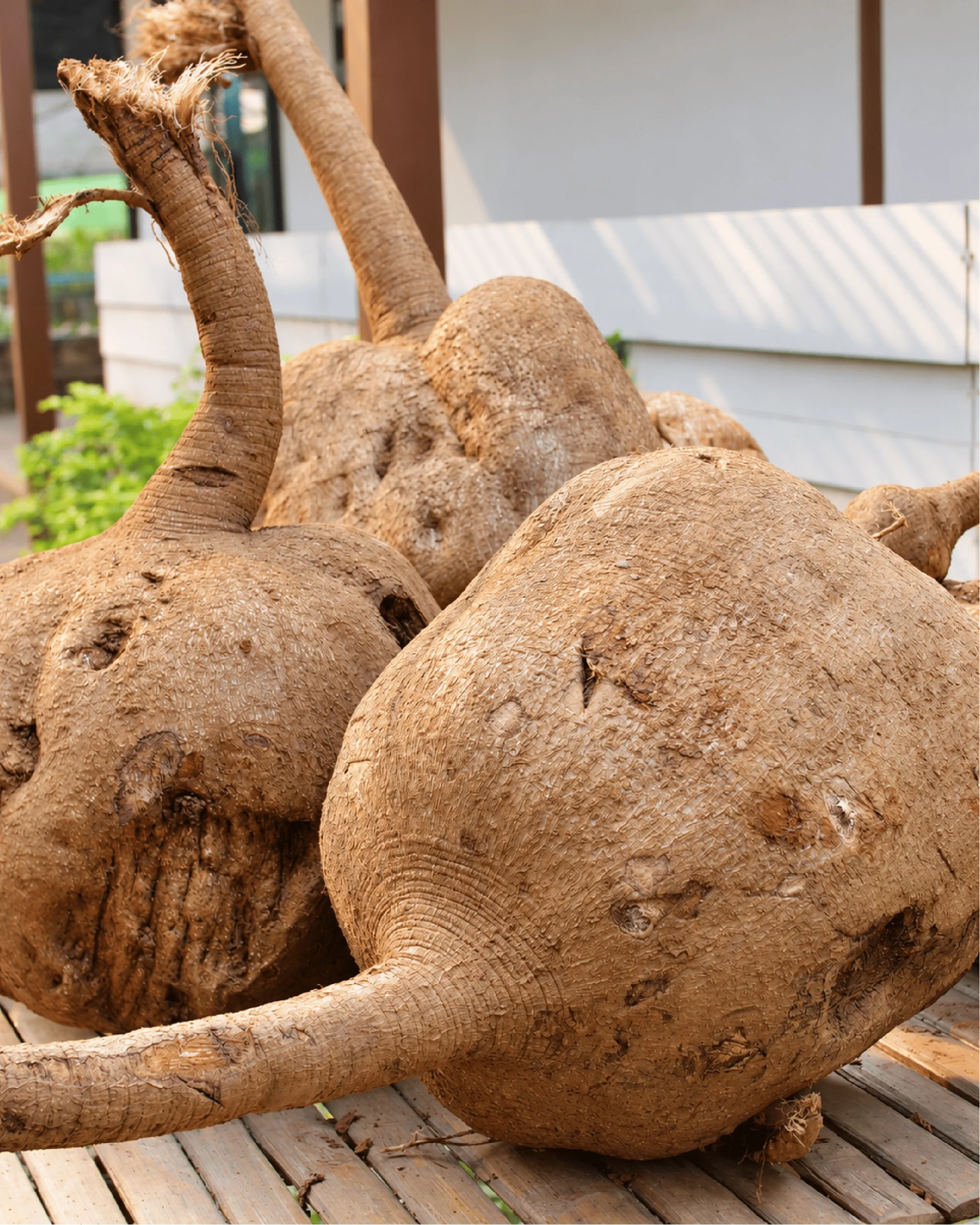
What Pueraria Mirifica is
Formally Pueraria candollei var. mirifica, it is a woody, tuberous-rooted plant in the legume family, native to the deciduous forests of northern Thailand. Its root has been used for generations in Thai folk medicine as a rejuvenating tonic, particularly among women navigating the changes of midlife.
What sets it apart from other legumes — including its well-known cousin Pueraria lobata, kudzu — is a small family of compounds called chromenes, most notably miroestrol, which has not been identified in any other known plant species. Alongside these, the root carries a broader spread of isoflavones such as puerarin, daidzein and genistein, which it shares with soy and other legumes.
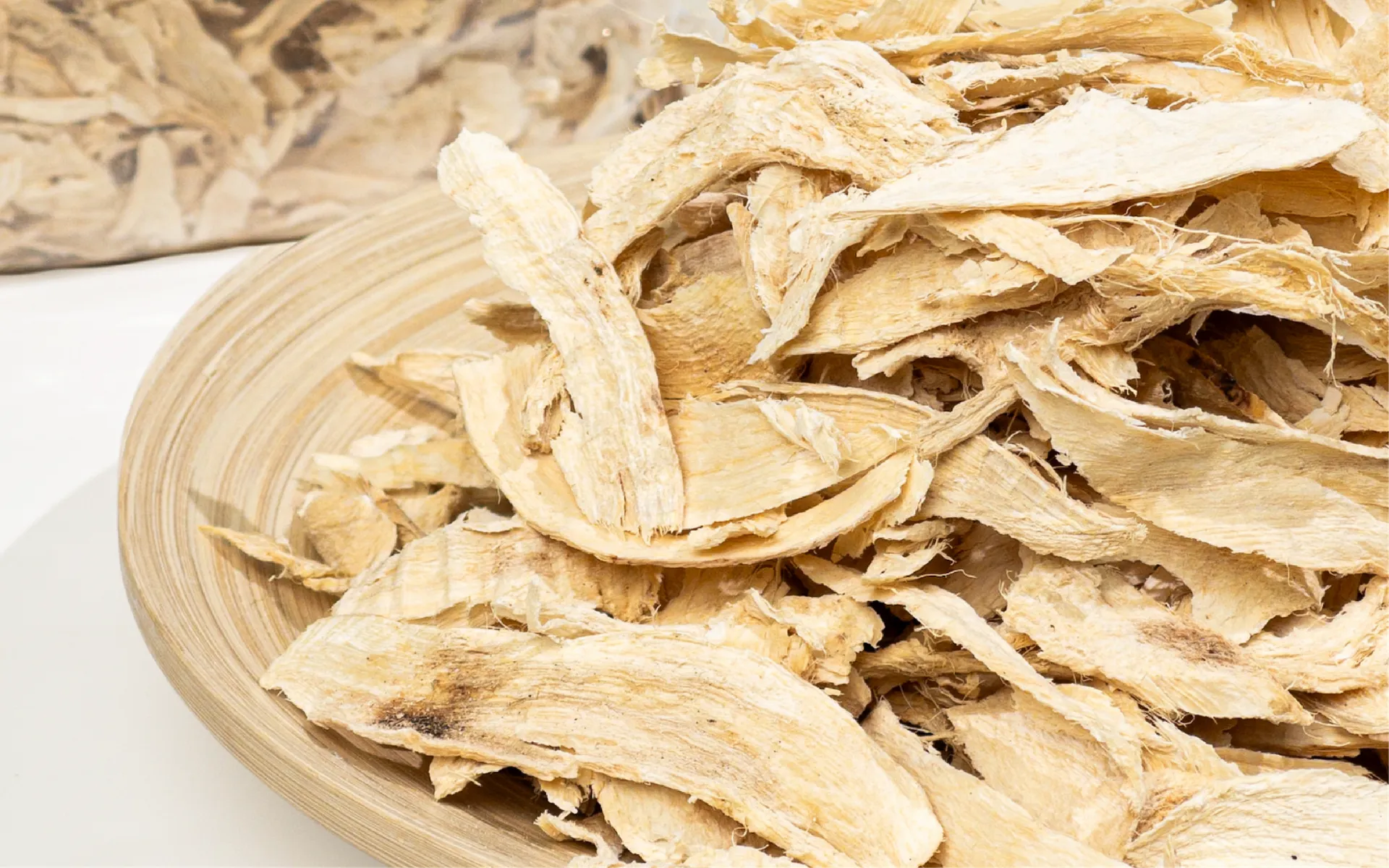
It is often confused with plants that are not the same:
- Soy isoflavones: Shares puerarin-class isoflavones, but none of the chromenes. Different potency, different research base.
- Red clover: Another isoflavone source. Frequently sold as interchangeable; it is not.
- Kudzu (P. lobata): Same genus, different variety. Lacks the benzopyranoid scaffold behind Pueraria Mirifica's estrogenic potency.
How it is believed to work
Miroestrol shares some structural similarity with the body’s own estrogen, which lets it interact — generally weakly, and in a tissue-dependent way — with estrogen receptors ERα and ERβ. Researchers describe this as a “SERM-like” action rather than a simple, uniform hormone substitute.
Being precise matters here: this is a proposed biological mechanism supported by laboratory and animal research, not a confirmed clinical outcome for every claimed benefit. Individual results are expected to vary with dose, formulation, extraction quality and physiology.

What the research actually shows
The evidence base is genuinely interesting and still developing — and more mixed than most marketing copy suggests. Three honest lines:
- Menopausal comfort Evidence: Small human trials
- Several small Thai trials report reduced symptom scores versus baseline; a 2018 systematic review found the studies small, inconsistently dosed and short of the standardisation needed for firm conclusions.
- Skin & topical use Evidence: Mechanistic + animal
- Topical application has been studied in animal models for tissue atrophy without evidence of systemic hormonal effect in that research. Firmness and elasticity claims lean on mechanism and traditional use, not large human dermatology trials.
- Breast size claims Evidence: Not supported
- Laboratory work on how phytoestrogens interact with breast tissue cells explains why the marketing exists.
Key takeaways
- Pueraria Mirifica is a Thai botanical root valued for phytoestrogens, notably miroestrol, which is not found in other plants.
- It comes in oral and topical formats, each with a different research base and a different intended use.
- Clinical evidence is real but limited: promising for some menopause- and skin-related outcomes, inconclusive for others, and unsupported for breast size.
- It is a cosmetic and supplement ingredient, not a drug, and is not intended to diagnose, treat, cure or prevent disease.
- Anyone pregnant, breastfeeding or managing a hormone-sensitive condition should speak with a healthcare provider before use.
Frequently asked questions
Is Pueraria Mirifica the same as soy or red clover?
No. All three contain isoflavones, but Pueraria Mirifica additionally contains miroestrol and deoxymiroestrol — chromene compounds unique to this species that are more estrogenic in laboratory studies than typical soy or red clover isoflavones.
Does Pueraria Mirifica actually increase breast size?
Some laboratory and traditional-use claims exist, but there is no robust, well-controlled clinical evidence that any product reliably changes breast size. Treat that specific claim with caution and rely on skin- and wellness-focused expectations instead.
Is it safe to use every day?
Long-term human safety data are still limited. Follow labelled directions, avoid exceeding suggested amounts, and consult a healthcare provider before long-term daily use, particularly if you have any hormone-related health condition.
Can men use Pueraria Mirifica?
Because of its estrogenic activity, it is formulated and studied almost exclusively for women's use. It is not recommended for men without medical guidance.
References
- Chansakaow, S. et al. (2000). Identification of deoxymiroestrol as the actual rejuvenating principle of “Kwao Keur,” Pueraria mirifica. Journal of Natural Products.
- Kongkaew, C. et al. (2018). Efficacy and safety of Pueraria candollei var. mirifica for menopausal women: a systematic review of clinical trials. Journal of Ethnopharmacology, 216, 162–174.
- Manonai, J. et al. (2008). Effects and safety of Pueraria mirifica on lipid profiles and biochemical markers of bone turnover. Menopause, 15(3), 530–535.
- Jaroenporn, S. et al. (2014). Improvements of vaginal atrophy without systemic side effects after topical application of Pueraria mirifica. Journal of Reproduction and Development, 60(3), 238–245.
- Matsumura, A. et al. (2005). Comparative study of oestrogenic properties of eight phytoestrogens in MCF7 human breast cancer cells. Journal of Steroid Biochemistry and Molecular Biology, 94(5), 431–443.
- Zeng, H. et al. (2026). Pueraria mirifica: a critical review of the ethnobotany, phytochemistry, pharmacology and challenges in standardization and safety. Frontiers in Pharmacology, 17, 1820644.
This page is intended for general educational purposes and does not constitute medical advice. Pueraria Mirifica products are cosmetic and dietary supplement items; they are not intended to diagnose, treat, cure or prevent any disease. Always read product labelling and consult a qualified healthcare professional before starting any new supplement, especially if pregnant, breastfeeding or managing a medical condition.