

Pueraria mirifica MTF: what people are looking for
Exploring plant-based options is a personal choice, and many people want clear, respectful information first. Access, budget, and comfort with the medical system all play a part.
This page shares what research exists today and how to bring a supplement into a conversation with your clinician.
What research tells us so far
Research on Pueraria mirifica is still early. Our search did not find a published clinical study in trans women, so what exists comes from a lab test and animal studies. These give researchers a starting point for understanding how the herb interacts with the body:
- Lab test with human receptors
- In yeast cells fitted with human ERα or ERβ, many tuber samples interacted with both receptors, with higher relative potency at ERβ. The same samples also showed anti-estrogenic activity.[1]
- Male mice
- Mice were given 10 or 100 mg per kg of body weight a day for 8 weeks. Neither amount changed blood levels of LH, FSH, or testosterone, and the higher amount lowered the weights of some reproductive organs. The authors reported no lasting effects after a recovery period.[2]
- Rats with their gonads removed
- At 1,000 mg per kg a day, the rise in LH was smaller in both sexes, and the change was smaller in males than in females. In males, levels recovered within one week after the herb was stopped.[3]
In plain terms: this is an early foundation. It does not yet show how the herb works in people, and these studies were not designed to look at gender-affirming effects.
Pueraria mirifica and prescribed hormones
No study we found has tested Pueraria mirifica together with prescribed estrogen or anti-androgen medicines, so there is no research guidance on combining them yet. In the lab test above, the samples showed both estrogenic and anti-estrogenic activity.[1]
Sharing your full supplement list with your prescriber lets them take everything you use into account. Keep your prescribed plan as your clinician set it, and talk with them before making any change.
Oral and skin-care formats
Pueraria mirifica comes in oral and skin-care formats. Research comparing formats in trans women has not been published yet. For how formats differ in general, see our guide to choosing a format.
The products below are made for women’s breast and chest skin care.
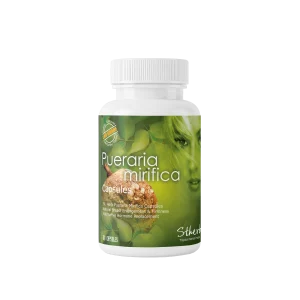
Core Pueraria Care
Breast Capsules 60 capsules

Core Pueraria Care
Breast Cream 100 g
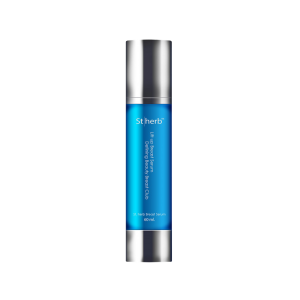
Core Pueraria Care
Breast Serum 60 ml
Making the most of your clinician visit
A clinician who is experienced in gender-affirming care can review your goals, medicines, and health history with you. A little preparation makes the visit easier:
List everything you take
Write down each medicine and supplement, including the format and how often you use it.
Share your goals
Tell your clinician what you hope to achieve, so the plan can fit you.
Ask about your health history
Ask whether any condition or medicine you have calls for extra care.
Plan your follow-up
Ask what check-ins make sense for you and when to get in touch sooner.
For a wider look at safety questions, see our Pueraria mirifica safety guide.
Key takeaways
- Research on Pueraria mirifica is at an early stage, and no published study in trans women was found.
- A lab test showed Pueraria mirifica preparations interact with both estrogen receptor types, with higher relative potency at ERβ.
- In animal studies, the authors reported no lasting effects in male mice, and hormone changes in male rats recovered within one week after the herb was stopped.
- No study has tested it with prescribed hormone medicines, so sharing your full supplement list helps your prescriber consider everything you take.
- Please skip it if you are pregnant, breastfeeding, under 18, or have a hormone-sensitive condition, and keep taking prescribed medicines as directed.
Frequently asked questions
Can Pueraria mirifica be part of a transition plan?
That is a personal choice, and a conversation with your clinician is the best next step. It is not a substitute for hormone therapy, and no published study in trans women has tested it yet.
Is there research on Pueraria mirifica in trans women?
Not yet, as far as we could find. Current research comes from a lab test and animal studies, which offer early insight into how the herb interacts with estrogen receptors.
Can I use it alongside prescribed estrogen or anti-androgen medicine?
No study has tested the combination, so there is no research guidance yet. Share your full supplement list with your prescriber, and keep taking prescribed medicines as directed.
Who can help me decide?
A clinician can review your goals, medicines, and health history. A pharmacist can also answer questions about how supplements and prescribed medicines may interact.
Sources
- Boonchird C, et al. Differential binding with ERalpha and ERbeta of the phytoestrogen-rich plant Pueraria mirifica. Brazilian Journal of Medical and Biological Research. 2010. PubMed
- Jaroenporn S, et al. Effects of Pueraria mirifica, an herb containing phytoestrogens, on reproductive organs and fertility of adult male mice. Endocrine. 2006. PubMed
- Malaivijitnond S, et al. Different effects of Pueraria mirifica, a herb containing phytoestrogens, on LH and FSH secretion in gonadectomized female and male rats. Journal of Pharmacological Sciences. 2004. PubMed
These statements have not been evaluated by the Food and Drug Administration. This product is not intended to diagnose, treat, cure or prevent any disease.
Herbal supplements are not a substitute for medical advice. Talk to a healthcare professional before use if you are pregnant, breastfeeding, taking medication or being treated for a medical condition.
Published by
Pueraria Mirifica™