

What Is Pueraria mirifica?
Pueraria mirifica, also known as White Kwao Krua, is a Thai botanical traditionally used in Thai herbal practices. Its roots contain phytoestrogens, including compounds that researchers have investigated for their estrogen-like biological activity.
Researchers have studied Pueraria mirifica to better understand its chemical composition, biological properties, and potential applications. However, findings from individual studies should be interpreted in context, as results may vary depending on the study design, preparation, and characteristics of the participants.
Clinical Research on Pueraria mirifica
A 2015 review published in the Journal of Science and Technology, Mahasarakham University summarized clinical research investigating Pueraria mirifica, including studies involving perimenopausal and postmenopausal women. The reported research examined menopausal symptom scores, hormone measurements, and other biological observations. Read the research review.
Phase 1: Menopausal Symptom Score Measurements
One clinical investigation evaluated women who received Pueraria mirifica capsules at daily amounts of 50 mg or 100 mg over six months. Researchers assessed reported symptoms using the Modified Greene Climacteric Scale (MGCS). Source: 2015 research review.
The review reported that the average MGCS score decreased from 44.1 at baseline to 26 after one month, 17 after three months, and 11.1 after six months. These figures describe changes observed during the study and do not, by themselves, establish that Pueraria mirifica caused the changes or that similar outcomes would occur in other populations. Source: 2015 research review.
Phase 2: Follow-Up Over Another Six Months
The review described a second phase in which participants continued taking Pueraria mirifica at daily amounts of 50 mg or 100 mg for another six months. The reported average MGCS scores changed as follows: Source: 2015 research review.
- 50 mg group: The average score decreased from 35.6 to 15.1 over six months.
- 100 mg group: The average score decreased from 32.6 to 13.6 over six months.
The review also discussed measurements of estrogen, follicle-stimulating hormone (FSH), and luteinizing hormone (LH), reporting fluctuations in estrogen and relatively stable FSH and LH measurements during the observation period. These findings do not establish that Pueraria mirifica maintains normal hormone levels or has no effects on hormonal regulation. Source: 2015 research review.
Phase 3: Comparison With Hormone Therapy
Another phase compared a group receiving Pueraria mirifica at 50 mg daily with a group receiving conjugated equine estrogen and medroxyprogesterone acetate. The review reported the following average MGCS scores after six months: Source: 2015 research review.
- Pueraria mirifica group: The average score decreased from 29.0 to 9.9.
- Hormone therapy group: The average score decreased from 32.26 to 8.16.
Although the reported scores decreased in both groups, these figures alone do not establish equivalent effectiveness, comparable safety, or interchangeability between Pueraria mirifica and hormone therapy. Such conclusions require an assessment of the original study design, statistical analysis, participant numbers, and safety outcomes. Source: 2015 research review.
Additional Research on Dried Pueraria mirifica Powder
The review also described a small study involving five postmenopausal women who received 200 mg of dried Pueraria mirifica powder daily for four months. The report described changes in participants’ accounts of hot flashes, sleep disturbances, feelings of discomfort, and dry skin. Source: 2015 research review.
Because this study included only five participants, its findings are preliminary and cannot establish general effectiveness or predict outcomes for other individuals or commercially available products. Source: 2015 research review.
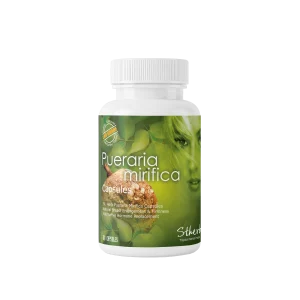
Core Pueraria Care
Breast Capsules 60 capsules
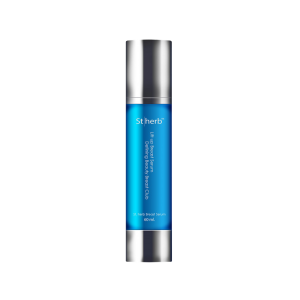
Core Pueraria Care
Breast Serum 60 ml
Understanding the Evidence
Pueraria mirifica contains plant compounds that have attracted scientific interest because of their estrogen-like activity. The clinical research summarized in the 2015 review provides observations about symptom scores and hormone measurements, but it does not establish definitive effectiveness or long-term safety. Source: 2015 research review.
Study findings may not apply to products with different formulations, extraction methods, or concentrations of plant compounds. Further research is needed to clarify the significance of the reported observations and better understand the safety profile of Pueraria mirifica.
Because Pueraria mirifica has estrogen-like biological activity, anyone considering its use should consult a qualified healthcare professional, particularly if they have a hormone-sensitive medical condition or take medication. This article is for educational purposes only and is not intended to provide medical advice or suggest replacing prescribed treatment.
Key takeaways
- Pueraria mirifica is a Thai botanical containing phytoestrogens that have been studied for their estrogen-like biological activity.
- Clinical studies have examined changes in menopausal symptom scores among women participating in Pueraria mirifica research.
- Some studies reported changes in hormone measurements, but these findings do not establish that the herb maintains normal hormone levels.
- A comparison of symptom scores does not prove that Pueraria mirifica is equivalent to conventional hormone therapy.
- Small studies and limited long-term evidence mean that further research is needed to understand effectiveness and safety.
- Anyone considering Pueraria mirifica should discuss potential risks and interactions with a qualified healthcare professional.
Frequently asked questions
What is Pueraria mirifica?
Pueraria mirifica is a Thai botanical, also known as White Kwao Krua. Its roots contain phytoestrogens that researchers have investigated for their estrogen-like biological activity.
What have clinical studies investigated?
Clinical research has examined menopausal symptom scores, hormone measurements, and other observations in women participating in studies of Pueraria mirifica. The findings do not establish definitive effectiveness or long-term safety.
Does Pueraria mirifica work like hormone replacement therapy?
A study summarized in a 2015 review compared symptom scores between participants receiving Pueraria mirifica and those receiving conventional hormone therapy. The reported score changes do not establish equivalent effectiveness or safety between the treatments.
Does Pueraria mirifica maintain normal hormone levels?
The review described measurements of estrogen, FSH, and LH during clinical investigations. These observations do not prove that Pueraria mirifica maintains normal hormone levels or has no hormonal effects.
Is the available research conclusive?
No. The reviewed studies have limitations, including a very small sample in one investigation, and further research is needed to clarify the findings and assess long-term safety.
Should I consult a healthcare professional before using Pueraria mirifica?
Yes. A qualified healthcare professional can help assess potential risks, especially for people with hormone-sensitive medical conditions or those taking medication.
Sources
These statements have not been evaluated by the Food and Drug Administration. This product is not intended to diagnose, treat, cure or prevent any disease.
Herbal supplements are not a substitute for medical advice. Talk to a healthcare professional before use if you are pregnant, breastfeeding, taking medication or being treated for a medical condition.
Published by
Pueraria Mirifica™