
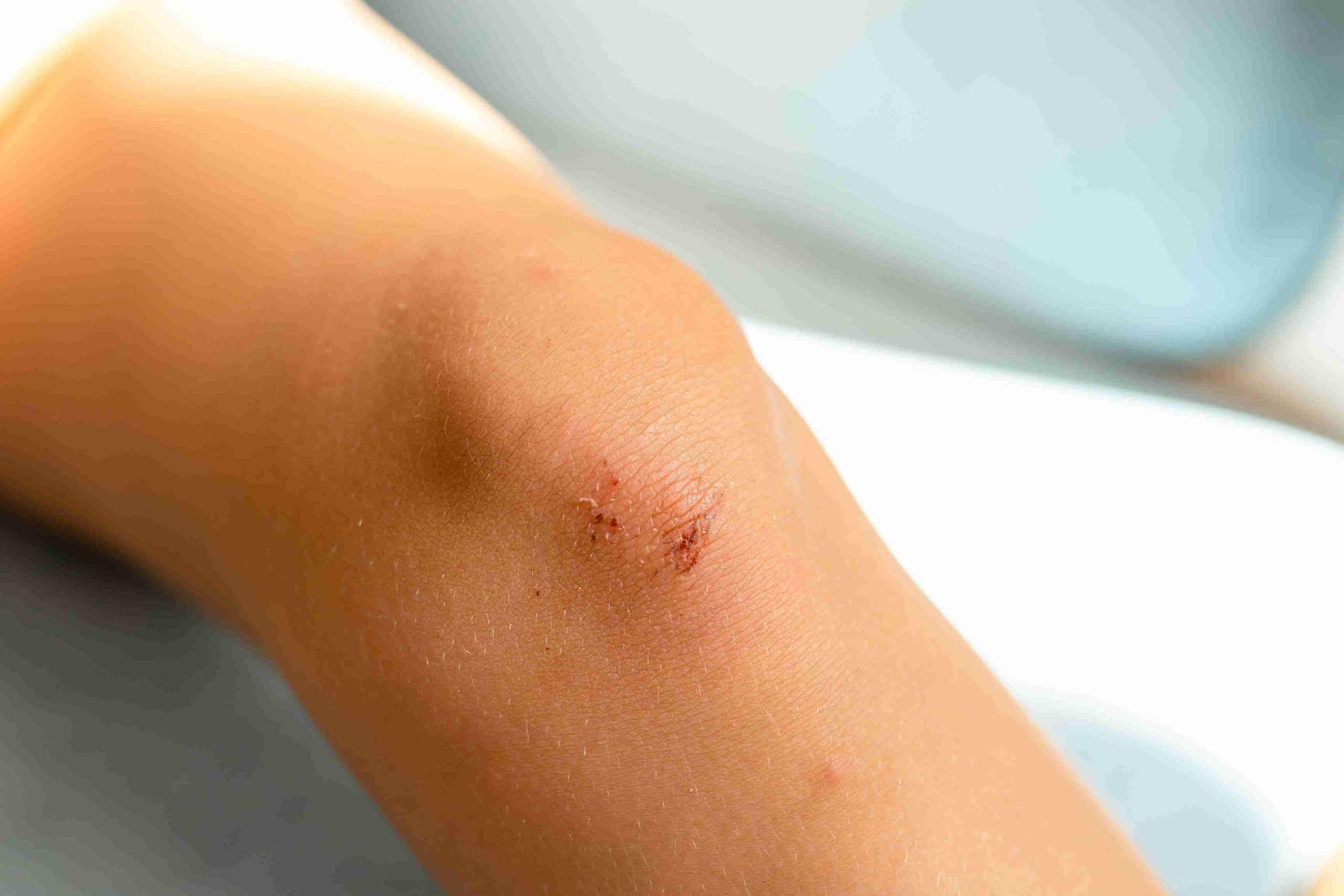
Skin repair is a coordinated biological process involving inflammation, cell proliferation, new tissue formation, and extracellular-matrix remodeling. Estrogen signaling is involved in several of these processes, which helps explain why changes in estrogen status can influence skin structure and repair.
Research on estrogen and skin has shown effects involving collagen production, skin thickness, hydration, barrier function, inflammation, re-epithelialization, and wound remodeling. Estrogen receptors are also present in important skin cell populations, including dermal fibroblasts. :contentReference[oaicite:0]{index=0}
The Fibroblast Connection
Fibroblasts are connective-tissue cells that play a central role during tissue repair. They contribute to the production and organization of extracellular-matrix components, including collagen, which provides structural support to healing tissue.
Human dermal fibroblasts express estrogen receptors, and experimental research indicates that estrogen signaling can influence fibroblast proliferation, migration, differentiation, and extracellular-matrix activity. These effects are particularly relevant during the proliferative phase of wound repair. :contentReference[oaicite:1]{index=1}
How Estrogen Signaling Can Support Collagen Formation
Collagen is one of the major structural proteins deposited during tissue repair. Estrogen has been associated with increased collagen synthesis and deposition as well as changes in the balance between collagen production and degradation.
Research has also linked estrogen signaling with pathways involving TGF-β1, a growth factor involved in extracellular-matrix formation and fibroblast behavior. Experimental evidence suggests that estrogen can influence TGF-β-related signaling in dermal fibroblasts and thereby affect collagen-related repair processes. :contentReference[oaicite:2]{index=2}
From Estrogen Signaling to Re-Epithelialization
Wound closure requires more than collagen production. Re-epithelialization allows keratinocytes to migrate and proliferate across the wound surface, helping restore the protective epidermal barrier.
Experimental studies have associated estrogen signaling with processes involved in re-epithelialization, granulation-tissue formation, and wound contraction. These mechanisms help explain why estrogen deficiency has been associated with slower or impaired skin repair in some experimental and clinical contexts. :contentReference[oaicite:3]{index=3}
Where Pueraria Mirifica Fits In
Pueraria mirifica is a Thai botanical known for its naturally occurring phytoestrogens. Its major compounds include miroestrol, deoxymiroestrol, puerarin, and other isoflavone-related constituents. Existing material on the botanical describes its estrogen-receptor activity and its relationship with skin quality and elasticity. :contentReference[oaicite:4]{index=4}
Because phytoestrogens can interact with estrogen receptors, it is biologically reasonable to investigate whether Pueraria mirifica may influence estrogen-responsive skin pathways. However, this mechanistic possibility should not be confused with evidence that Pueraria mirifica directly treats wounds or accelerates wound closure in humans.
What the Existing Skin Evidence Suggests
Research summarized in the available Pueraria mirifica material describes improvements in skin hydration, elasticity, and thickness in studies involving perimenopausal and postmenopausal women following consistent supplementation. Some studies also reported changes in pigmentation-related measures. :contentReference[oaicite:5]{index=5}
The same material describes Pueraria mirifica as a phytoestrogen-containing botanical that may support skin-related changes through an internal, hormonal dimension rather than acting only at the surface. :contentReference[oaicite:6]{index=6}
These findings are relevant to the broader biology of skin maintenance, but they do not establish Pueraria mirifica as a wound-healing treatment. Direct clinical research specifically measuring wound closure, scar quality, or healing time after injury would be needed to make that conclusion.
Why Mechanism Does Not Equal Clinical Proof
The distinction between biological mechanism and clinical outcome is especially important for botanical ingredients. Estrogen itself has been extensively studied in relation to wound healing, while Pueraria mirifica is a botanical source of phytoestrogenic compounds. Evidence about estrogen therefore provides a biological framework, not automatic proof of an equivalent effect from Pueraria mirifica.
Phytoestrogens can differ from endogenous estradiol in receptor affinity, selectivity, metabolism, tissue exposure, and biological potency. The concentration and chemical profile of an extract can also influence its activity.
- Estrogen research: provides evidence about estrogen-responsive tissue-repair pathways.
- Phytoestrogen research: helps explain how plant compounds may interact with estrogen-related signaling.
- Pueraria mirifica research: provides botanical-specific evidence that must be evaluated independently.
- Wound-healing trials: would be necessary to establish a direct clinical benefit for wound repair.
Internal Skin Support vs. Direct Wound Care
There is an important difference between supporting long-term skin quality and treating an active wound. Nutritional and hormonal factors can influence the cellular environment in which skin is maintained and repaired, while wound care addresses the immediate requirements of an injury.
For an open, infected, deep, or slow-healing wound, appropriate medical assessment and wound care should take priority. A supplement should not replace cleaning, protection, infection management, or other treatment recommended by a healthcare professional.
The Bigger Picture: Estrogen, Fibroblasts, and Skin Aging
The relationship between estrogen and skin becomes particularly interesting during periods of declining estrogen. Research has associated estrogen deficiency with changes in collagen, elasticity, hydration, and wound-repair capacity. :contentReference[oaicite:7]{index=7}
The available Pueraria mirifica material similarly emphasizes the relationship between phytoestrogen supplementation and skin characteristics such as hydration, elasticity, and thickness. :contentReference[oaicite:8]{index=8}
This creates a useful research pathway: rather than asking whether a botanical is simply a “wound healer,” researchers can investigate how its constituents interact with estrogen-responsive cells and whether those interactions translate into measurable improvements in skin repair or maintenance.
What Future Research Should Examine
Future studies could help clarify whether Pueraria mirifica has meaningful applications in tissue repair by examining several measurable outcomes.
- Fibroblast proliferation and migration after injury.
- Collagen synthesis and extracellular-matrix organization.
- Estrogen receptor-specific activity of individual Pueraria compounds.
- Re-epithelialization and wound-closure rates.
- Inflammatory signaling during different stages of repair.
- Scar formation and long-term remodeling.
These studies would help distinguish a plausible estrogenic mechanism from a demonstrated clinical wound-healing effect.
Explore Pueraria Mirifica Products
Explore the Pueraria mirifica product collection for botanical formulations centered on the plant’s traditional use and phytoestrogen-rich profile.
Explore Pueraria Mirifica ProductsFrequently Asked Questions
Does Pueraria Mirifica directly heal wounds?
Current evidence does not establish Pueraria mirifica as a direct wound-healing treatment. Its phytoestrogenic properties provide a biological reason to study its relationship with estrogen-responsive skin pathways, but direct clinical wound-healing evidence is still needed.
How are fibroblasts involved in wound healing?
Fibroblasts are connective-tissue cells that produce and organize extracellular-matrix components such as collagen. Their proliferation, migration, and activity are important during the tissue-building and remodeling stages of wound repair.
Why is estrogen relevant to skin repair?
Estrogen signaling influences several skin processes, including fibroblast activity, collagen production, inflammation, re-epithelialization, and extracellular-matrix remodeling. Estrogen deficiency has been associated with impaired aspects of skin repair.
Can phytoestrogens work in the same way as estrogen?
Phytoestrogens can interact with estrogen receptors, but their activity is generally different from endogenous estradiol. Receptor selectivity, potency, metabolism, dose, and tissue exposure all influence their biological effects.
Is Pueraria Mirifica appropriate for an open or infected wound?
Pueraria mirifica should not be used as a substitute for appropriate wound care. Open, deep, infected, or slow-healing wounds should be evaluated and managed by an appropriate healthcare professional.